• In recent weeks, security researchers have observed a surge in targeted attacks attributed to the COLDRIVER advanced persistent threat (APT) group.

    This adversary has introduced a new PowerShell-based backdoor, dubbed BAITSWITCH, which exhibits sophisticated command-and-control techniques while blending into legitimate Windows processes.

    Initial sightings trace back to late July 2025, when intrusion attempts against government non-profits in Southeast Asia began to spike, leveraging spear-phishing emails that carried weaponized Office documents.

    These documents, when opened, silently invoked PowerShell scripts that established the foothold for BAITSWITCH. Early indicators suggest that the group refined its social-engineering lures to mimic internal memos, increasing click-through rates among high-value targets.

    Following these initial incursions, Zscaler researchers noted that BAITSWITCH diverges from typical script-based loaders by embedding its entire payload within encoded PowerShell commands.

    Rather than downloading binaries directly from public repositories, the loader unpacks an encrypted module directly in memory. This approach minimizes forensic artifacts on disk, hindering traditional antivirus tools.

    Within a week of its emergence, Zscaler analysts identified lateral-movement attempts by BAITSWITCH operators, demonstrating usage of built-in Windows utilities such as Invoke-Command and Get-Service to enumerate and pivot across the network .

    By September 2025, incident response teams reported compromised Active Directory accounts in several organizations, with exfiltration of proprietary documents and system snapshots.

    Multi-stage end-to-end ClickFix campaign attack chain leveraging BAITSWITCH to deliver SIMPLEFIX (Source – Zscaler)

    The impact of BAITSWITCH extends beyond data theft; its stealthy communication channels have allowed the actor to reside dormant for weeks before executing destructive payloads.

    Organizations with incomplete PowerShell logging or lacking network egress monitoring have proven especially vulnerable to undetected persistence.

    Infection Mechanism

    The infection chain of BAITSWITCH hinges on a multi-stage PowerShell deployment sequence. First, victims receive a lure document with macros that execute the following snippet upon user interaction:-

    $EncPayload = "JHtQcml2YXRlS2V5fQ=="
    $Decoded = [System.Text.Encoding]::UTF8.GetString([System.Convert]::FromBase64String($EncPayload))
    Invoke-Expression $Decoded
    ClickFix social-engineering decoy document hosted on Google Drive (Source – Zscaler)

    This code decodes a Base64-encoded string containing the next-stage loader. The loader then performs an AES decryption routine using a hard-coded key within the script to reveal the final backdoor module:

    Function Decrypt-Module($cipherText,$key){
        $AES = [System.Security.Cryptography.Aes]::Create()
        $AES.Key = [Convert]::FromBase64String($key)
        $AES.Mode = 'CBC'
        $AES.IV = $AES.Key[0..15]
        $decryptor = $AES.CreateDecryptor()
        return [System.Text.Encoding]::UTF8.GetString($decryptor.TransformFinalBlock([Convert]::FromBase64String($cipherText),0,$cipherText.Length))
    }

    Upon decryption, BAITSWITCH registers itself as a scheduled task named “WindowsUpdateSvc” and injects its commands into the svchost.exe process to evade detection.

    The backdoor communicates with its C2 server over HTTPS, masquerading traffic as routine Windows Update requests. This infection mechanism underscores COLDRIVER’s emphasis on script-only payloads and operational security, complicating both detection and remediation efforts.

    Follow us on Google NewsLinkedIn, and X to Get More Instant UpdatesSet CSN as a Preferred Source in Google.

    The post COLDRIVER APT Group Uses ClickFix To Deliver a New PowerShell-Based Backdoor BAITSWITCH appeared first on Cyber Security News.

    ¶¶¶¶¶

    ¶¶¶¶¶

    ¶¶¶¶¶

    ¶¶¶¶¶

    ¶¶¶¶¶

  • In July 2024, Recorded Future’s Insikt Group publicly exposed TAG-100, a cyber-espionage campaign leveraging the Go-based backdoor Pantegana against high-profile government, intergovernmental and private organizations worldwide. New evidence now attributes TAG-100 to a Chinese state-sponsored threat actor, designated RedNovember. Between June 2024 and July 2025, RedNovember—overlapping with Storm-2077—has expanded its operations to target perimeter appliances […]

    The post RedNovember Hackers Targeting Government and Tech Organizations to Install Backdoor appeared first on GBHackers Security | #1 Globally Trusted Cyber Security News Platform.

    ¶¶¶¶¶

    ¶¶¶¶¶

    ¶¶¶¶¶

    ¶¶¶¶¶

    ¶¶¶¶¶

  • A critical vulnerability in the implementation of the TACACS+ protocol for Cisco IOS and IOS XE Software could allow an unauthenticated, remote attacker to bypass authentication controls or access sensitive data.

    The flaw originates from the software’s failure to properly verify whether a required TACACS+ shared secret is configured, creating a window for machine-in-the-middle (MitM) attacks.

    Cisco has released software updates to address the issue and has provided a workaround for immediate mitigation.

    Authentication Bypass and Data Exposure

    The core of this vulnerability lies in how affected devices handle TACACS+ authentication when a shared secret key is missing from the configuration.

    An attacker positioned on the network between the Cisco device and the TACACS+ server can exploit this oversight in two primary ways. First, they can intercept TACACS+ messages, which would be unencrypted due to the missing secret, and read sensitive information contained within them.

    Second, the attacker could impersonate the TACACS+ server and falsely approve any authentication request from the device. A successful exploit could grant the attacker complete, unauthorized access to the network device or expose confidential data.

    This vulnerability was discovered internally during the resolution of a Cisco Technical Assistance Center (TAC) support case.

    A Cisco device is only affected by this vulnerability if it is running a susceptible version of Cisco IOS or IOS XE Software and is configured to use TACACS+ without a shared secret defined for every server.

    Administrators can determine their exposure by inspecting their device’s running configuration. Using command-line interface (CLI) commands such as show running-config | include tacacs, administrators can first confirm if TACACS+ is enabled.

    If it is, they must then verify that a shared secret key is configured for every TACACS+ server entry. If any configured server is missing its associated key, the device is vulnerable to exploitation and requires immediate remediation.

    Cisco has issued a security advisory detailing the vulnerability and has made fixed software releases available for affected products. The company strongly recommends that all customers upgrade to a patched version of IOS or IOS XE to permanently resolve the issue.

    As a temporary solution, an effective workaround is available. Administrators can mitigate the vulnerability by ensuring that a shared secret key is properly configured for every TACACS+ server on their devices.

    While this workaround prevents exploitation, Cisco considers it a temporary measure until the software can be upgraded.

    The Cisco Product Security Incident Response Team (PSIRT) has stated that it is not aware of any public announcements or malicious use of this vulnerability in the wild.

    Follow us on Google News, LinkedIn, and X for daily cybersecurity updates. Contact us to feature your stories.

    The post Cisco IOS and XE Vulnerability Let Remote Attacker Bypass Authentication and Access Sensitive Data appeared first on Cyber Security News.
    ¶¶¶¶¶

    ¶¶¶¶¶

    ¶¶¶¶¶

    ¶¶¶¶¶

    ¶¶¶¶¶

  • A recent wave of sophisticated phishing attacks has targeted developers and startups by impersonating Y Combinator through GitHub notifications. Victims are being tricked into believing they’ve been selected for startup funding, only to face financial theft via fake verification schemes. This incident spotlights the new tactics phishers use to exploit trusted online platforms and reputable […]

    The post Hackers Use GitHub Notifications to Impersonate Y Combinator and Steal Wallet Funds appeared first on GBHackers Security | #1 Globally Trusted Cyber Security News Platform.

    ¶¶¶¶¶

    ¶¶¶¶¶

    ¶¶¶¶¶

    ¶¶¶¶¶

    ¶¶¶¶¶

  • Volvo Group North America has begun notifying employees and associates about a data breach that exposed their personal information, including names and Social Security numbers.

    The security incident did not originate within Volvo’s own networks but was the result of a ransomware attack on one of its third-party human resources software suppliers, a company named Miljdata. The breach highlights the persistent and growing risks associated with supply chain vulnerabilities.

    According to the data breach notification letter, the initial security incident targeting Miljdata occurred on August 20, 2025. The HR software provider first became aware of the ransomware attack three days later, on August 23.

    It wasn’t until September 2, 2025, that Miljdata determined that data belonging to Volvo Group personnel had been compromised in the attack. Miljdata informed Volvo Group of the exposure on the same day.

    Volvo has emphasized that its own internal systems were not compromised as part of this event and that the breach was contained within the environment of its supplier.

    Information Compromised

    The investigation has revealed that the exposed data may have included a combination of individuals’ first and last names along with their Social Security numbers.

    In response to the breach, Volvo Group North America has taken steps to mitigate the potential harm to those affected. The company is offering a complimentary 18-month subscription to Allstate’s Identity Protection Pro service.

    This service provides a suite of protective tools, including tri-bureau credit monitoring, dark web monitoring, financial transaction monitoring, and full-service identity restoration support. An email and a welcome letter are being sent to impacted individuals with instructions on how to enroll in the service.

    Volvo Group is urging all potentially affected individuals to remain vigilant against incidents of identity theft and fraud. The company apologizes for the inconvenience and is working closely with Miljdata to ensure appropriate actions are taken.

    Follow us on Google News, LinkedIn, and X for daily cybersecurity updates. Contact us to feature your stories.

    The post Volvo Group Discloses Data Breach After Ransomware Attack on HR Supplier appeared first on Cyber Security News.

    ¶¶¶¶¶

    ¶¶¶¶¶

    ¶¶¶¶¶

    ¶¶¶¶¶

    ¶¶¶¶¶

  • A recent credential phishing campaign detected by Microsoft Threat Intelligence used AI-generated code within an SVG file to disguise malicious behavior. While the novel obfuscation techniques showcased attacker ingenuity, AI-powered defenses successfully blocked the attack—underscoring that AI-augmented threats remain detectable when defenders adapt analytic strategies. On August 18, Microsoft Threat Intelligence identified a targeted phishing […]

    The post Hackers Use AI-Generated Code to Obfuscate Payloads and Bypass Traditional Defenses appeared first on GBHackers Security | #1 Globally Trusted Cyber Security News Platform.

    ¶¶¶¶¶

    ¶¶¶¶¶

    ¶¶¶¶¶

    ¶¶¶¶¶

    ¶¶¶¶¶

  • The latest Gcore Radar report analyzing attack data from Q1–Q2 2025, reveals a 41% year-on-year increase in total attack volume. The largest attack peaked at 2.2 Tbps, surpassing the 2 Tbps record in late 2024. Attacks are growing not only in scale but in sophistication, with longer durations, multi-layered strategies, and a shift in target industries. Technology now overtakes gaming as the most

    ¶¶¶¶¶

    ¶¶¶¶¶

    ¶¶¶¶¶

    ¶¶¶¶¶

    ¶¶¶¶¶

  • A fresh wave of domain-confusion phishing emails is sweeping through the Python community, once again setting its sights on PyPI maintainers. As malicious actors continually swap out domain names, PyPI users must remain vigilant and adopt stronger safeguards to protect their accounts. In this latest iteration, maintainers receive an unsolicited email urging them to “verify […]

    The post New Phishing Scam Aims at PyPI Maintainers to Steal Login Information appeared first on GBHackers Security | #1 Globally Trusted Cyber Security News Platform.

    ¶¶¶¶¶

    ¶¶¶¶¶

    ¶¶¶¶¶

    ¶¶¶¶¶

    ¶¶¶¶¶

  • A critical vulnerability in NVIDIA’s Merlin Transformers4Rec library (CVE-2025-23298) enables unauthenticated attackers to achieve remote code execution (RCE) with root privileges via unsafe deserialization in the model checkpoint loader. 

    The discovery underscores the persistent security risks inherent in ML/AI frameworks’ reliance on Python’s pickle serialization.

    NVIDIA Merlin Vulnerability

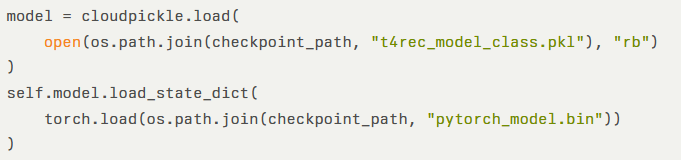
    Trend Micro’s Zero Day Initiative (ZDI) stated that the vulnerability resides in the load_model_trainer_states_from_checkpoint function, which uses PyTorch’s torch.load() without safety parameters. Under the hood, torch.load() leverages Python’s pickle module, allowing arbitrary object deserialization

    Attackers can embed malicious code in a crafted checkpoint file—triggering execution when untrusted pickle data is loaded. In the vulnerable implementation, cloudpickle loads the model class directly:

    NVIDIA Merlin Vulnerability

    This approach grants attackers full control of the deserialization process. By defining a custom __reduce__ method, a malicious checkpoint can execute arbitrary system commands upon loading, e.g., calling os.system() to fetch and execute a remote script.

    The attack surface is vast: ML practitioners routinely share pre-trained checkpoints via public repositories or cloud storage. Production ML pipelines often run with elevated privileges, meaning a successful exploit not only compromises the model host but can also escalate to root-level access.

    To demonstrate the flaw, researchers crafted a malicious checkpoint:

    NVIDIA Merlin Vulnerability

    Loading this checkpoint via the vulnerable function triggers the embedded shell command prior to any model weight restoration—resulting in immediate RCE under the context of the ML service.

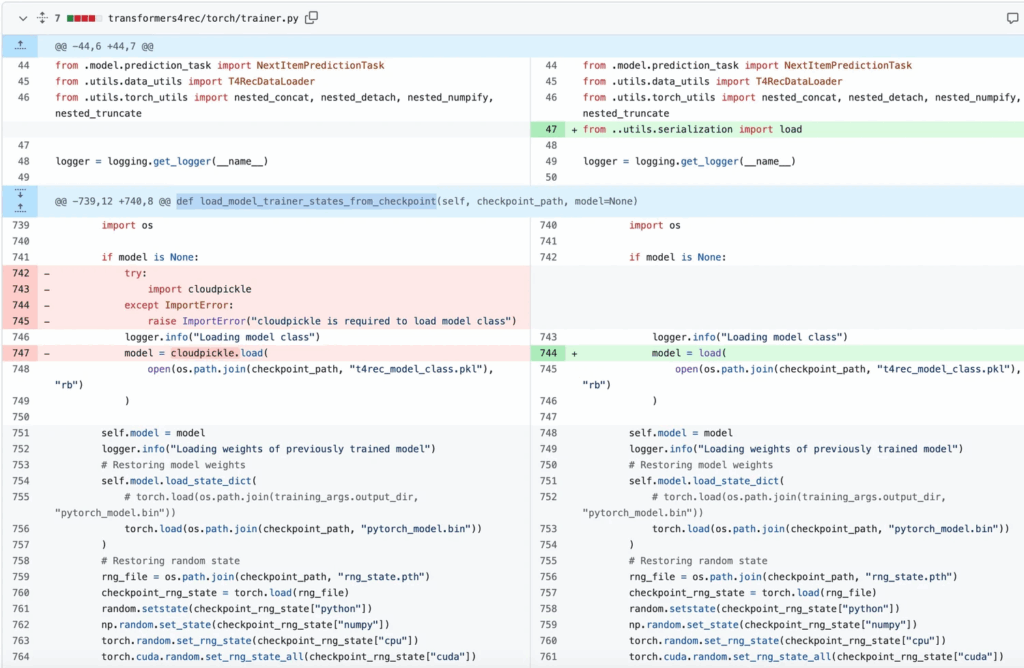
    NVIDIA addressed the issue in PR #802 by replacing raw pickle calls with a custom load() function that whitelists approved classes. 

    The patched loader in serialization.py enforces input validation, and developers are encouraged to use weights_only=True in torch.load() to avoid untrusted object deserialization.

    Patch adding a custom load function
    Patch adding a custom load function

    Developers must never use pickle on untrusted data and should restrict deserialization to known, safe classes. 

    Alternative formats—such as Safetensors or ONNX—offer safer model persistence. Organizations should enforce cryptographic signing of model files, sandbox deserialization processes, and include ML pipelines in regular security audits. 

    Risk FactorsDetails
    Affected ProductsNVIDIA Merlin Transformers4Rec ≤ v1.5.0
    ImpactRemote code execution as root
    Exploit PrerequisitesAttacker-supplied model checkpoint loaded via torch.load()
    CVSS 3.1 Score9.8 (Critical)

    The broader community must advocate for security-first design principles and deprecate pickle-based mechanisms altogether.

    Until pickle reliance is eliminated, similar vulnerabilities will persist. Vigilance, robust input validation, and a zero-trust mindset remain crucial to safeguarding production ML systems against supply-chain and RCE threats.

    Follow us on Google News, LinkedIn, and X for daily cybersecurity updates. Contact us to feature your stories.

    The post NVIDIA Merlin Vulnerability Allow Attacker to Achieve Remote Code Execution With Root Privileges appeared first on Cyber Security News.

    ¶¶¶¶¶

    ¶¶¶¶¶

    ¶¶¶¶¶

    ¶¶¶¶¶

    ¶¶¶¶¶

  • Threat actors from the Lone None group are exploiting copyright takedown notices to distribute sophisticated malware, including Pure Logs Stealer and a newly identified information stealer dubbed Lone None Stealer (also known as PXA Stealer). This analysis examines the campaign’s tactics, techniques, and procedures (TTPs), highlights key indicators of compromise (IOCs), and underscores how Lone […]

    The post Malware Deployment via Copyright Takedown Claims by Threat Actors appeared first on GBHackers Security | #1 Globally Trusted Cyber Security News Platform.

    ¶¶¶¶¶

    ¶¶¶¶¶

    ¶¶¶¶¶

    ¶¶¶¶¶

    ¶¶¶¶¶